UN experts and scholars examine Taiwan’s SEPLS-based model using AI, remote sensing, and TEK to scale carbon sinks and drive a just net-zero transition.
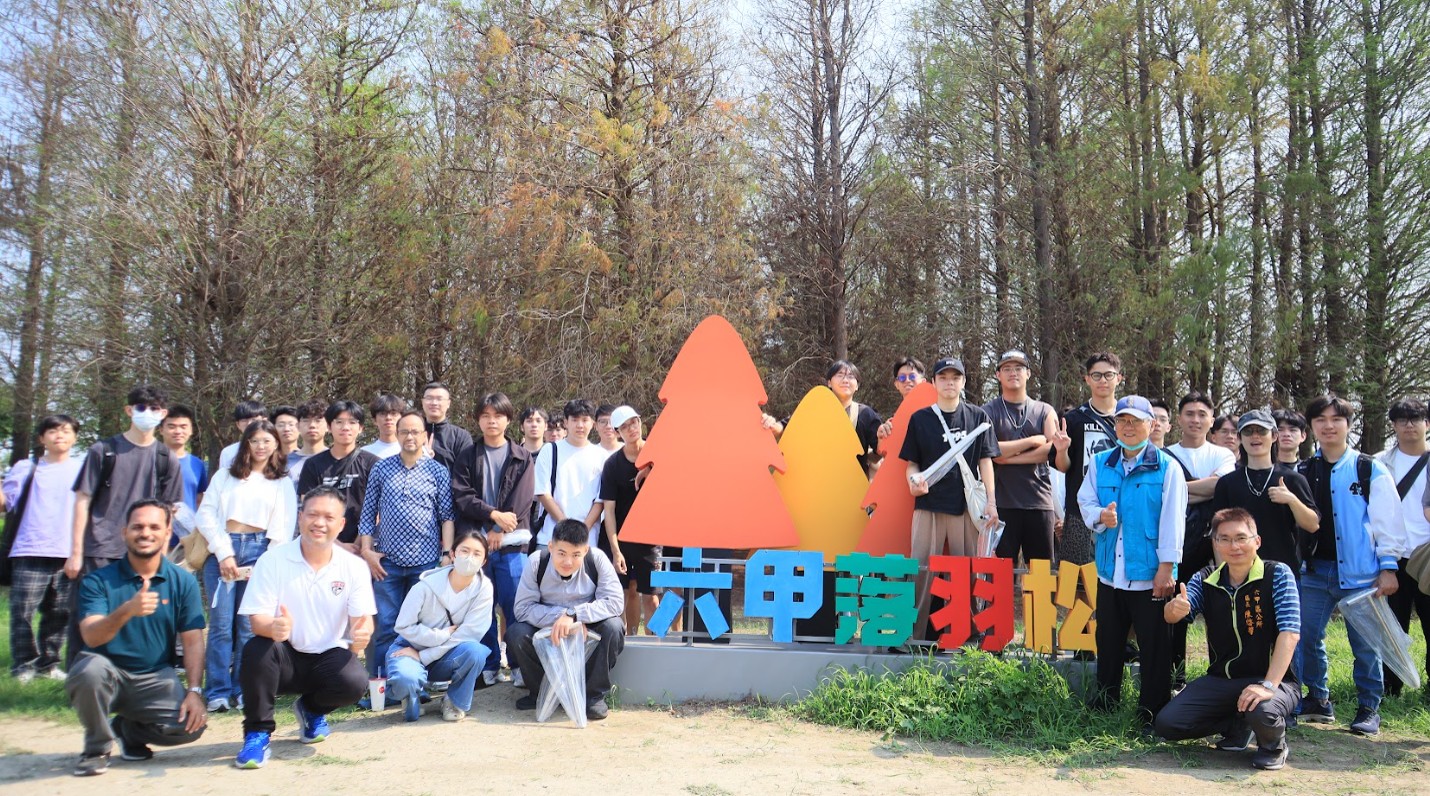
TAIWAN, April 27, 2026 /EINPresswire.com/ — Several districts across Tainan City simultaneously drew international attention today. Led by Professor Yen-Hsun Su, Principal Investigator of the Satoyama Mace Initiative, and Mr. Chen-Piao Yen, Chair of the New Agricultural Biotechnology Production Cooperative—partner of the International Partnership for the Satoyama Initiative (IPSI)—the delegation included Dr. Pradeep Mehta, Climate and Environment Action Specialist from the United Nations Development Programme (UNDP), and Dr. Amit Sharma, member of the International Union for Conservation of Nature (IUCN). Together with 40 students from the College of Semiconductor Technology and the Department of Materials Science at National Cheng Kung University, they formed a cross-national and cross-generational team.
The group conducted on-site investigations across Liujia, Dongshan, Baihe, Houbi, and Yanshui districts to examine Taiwan’s “net-zero pathways” and carbon sink potential under the “Taiwan Model.” Integrating satellite remote sensing, artificial intelligence analysis, and traditional ecological knowledge (TEK), the initiative comprehensively assessed Taiwan’s carbon sink capacity and institutional innovation within the Social-Ecological Production Landscape and Seascape (SEPLS) framework. The visit highlighted tangible outcomes of aligning local governance with global climate policy.
Liujia District: Bald Cypress Forest Becomes a Global Carbon Sink Demonstration Site
At the Jingpu Wetland bald cypress site in Liujia, the team conducted precision carbon sampling. District Chief Chi-Jung Chen noted that while the bald cypress is a renowned winter tourism attraction in southern Taiwan, its lakeside forest belt has been transformed under the “Taiwan Model” into a natural carbon asset of international significance.
Supported by remote sensing data from Taiwan’s National Space Organization (TASA) and aligned with the principles of the United Nations University Institute for the Advanced Study of Sustainability (UNU-IAS), the Liujia landscape demonstrates strong potential to integrate into global climate governance frameworks. Through the Satoyama Mace Initiative, carbon rights are transformed from abstract data into “reciprocal contracts,” enabling local communities to become co-creators of carbon value.
Dongshan District: Dragon Fruit Industry Demonstrates Bio-cultural Dividend
In Dongshan, the delegation visited dragon fruit farms to observe carbon sink capacity and soil adaptability. District Chief Cheng-Lang Chang noted that Dongshan cultivates over 25 varieties of dragon fruit, recognized as the highest quality nationwide and known as Tainan’s “Red Diamond.”
Under the “Taiwan Model,” traditional agriculture is being transformed into a high-integrity economic system that generates a “Bio-cultural Dividend.” By integrating remote sensing data with international biodiversity frameworks, farmers evolve from producers into stewards and creators of ecological value—positioning Dongshan as a replicable global model for sustainable agriculture.
Baihe District: Bamboo Landscapes Transformed into Global Carbon Assets
Famed for its magnificent bamboo forests—often called Taiwan’s version of Arashiyama—Baihe served as a key research site. International experts and students conducted carbon sampling to analyze carbon sequestration potential and ecological value.
Through satellite monitoring and AI technologies, Baihe is converting its SEPLS bamboo landscapes into high-integrity carbon assets. The district also implements the principle of Free, Prior, and Informed Consent (FPIC), ensuring local community participation in carbon markets and equitable benefit-sharing, advancing a just transition.
District Chief Li-Hua Tung emphasized that interdisciplinary collaboration is transforming traditional ecological knowledge into globally competitive environmental assets, positioning local landscapes as vital components of global climate governance.
Houbi District: Guava Industry Advances Toward a Carbon Credit Economy
Houbi, renowned for its guava production, exemplifies the essence of Taiwan’s rural agricultural landscape. This visit focused on carbon sink potential within guava orchards and pathways for agricultural transformation.
District Chief Chih-Pin Lee highlighted that, with support from TASA’s remote sensing technologies, Houbi is upgrading traditional agriculture into a “carbon credit economy system.” Through the concept of Bio-cultural Dividend, farmers can generate real income while protecting the environment.
The “Taiwan Model” emphasizes that carbon sinks must be rooted in community well-being. Through reciprocal contract mechanisms, carbon revenues are reinvested locally, achieving a win-win for rural development and climate governance.
Yanshui District: Dryland Farming Transformation Showcases Climate Resilience
In response to extreme climate challenges, Yanshui has demonstrated strong resilience through dryland agricultural transformation. The cultivation of drought-resistant crops such as golden buckwheat, sorghum, and soybeans reduces water usage while enhancing carbon storage capacity.
District Chief Wen-Chi Chen noted that by integrating remote sensing data with the concept of “vertical wetlands,” Yanshui has successfully converted agricultural transformation outcomes into high-integrity carbon assets. This model aligns with Nationally Determined Contributions (NDCs) and ensures that benefits flow back to local communities, supporting a just transition.
Dr. Pradeep Mehta praised Taiwan’s approach, noting that it effectively translates abstract climate policies into concrete agricultural actions with strong international demonstration value. He expressed continued support for the development of related carbon credit mechanisms.
From Local to Global: A Regenerative Blueprint of the “Taiwan Model”
This international field study demonstrates that Taiwan’s net-zero potential extends beyond its high-tech industries, deeply rooted in the integration of local society, ecology, and culture. By combining AI, satellite observation, and traditional ecological knowledge, the “Taiwan Model” transforms carbon credits from emission tools into “reciprocal contracts” that promote social equity and cultural preservation. From the bald cypress forests of Liujia, dragon fruit farms of Dongshan, bamboo landscapes of Baihe, guava orchards of Houbi, to the dryland agriculture of Yanshui, these local practices collectively illustrate a “vertically integrated ecosystem resilience” blueprint—from ocean to mountains.
Moving forward, Taiwan will continue strengthening collaboration with international organizations to bring the “Taiwan Model” to the global stage—demonstrating that local communities can serve as core drivers of climate governance and sustainable development, and offering a scalable, replicable solution for a regenerative global future.
About Satoyama Mace Initiative
The Satoyama Mace Initiative: Indigenous Partnership Platform is a collaborative framework advancing Indigenous-led climate solutions across SEPLS landscapes. It focuses on integrating traditional ecological knowledge with modern climate science and finance mechanisms to support NDC and NAP implementation. The Satoyama Mace Initiative is a Taiwan-based international platform that advances integrated approaches to climate action by linking biodiversity conservation, carbon markets, and community-based governance. Rooted in the concept of socio-ecological production landscapes and seascapes (SEPLS), the initiative promotes high-integrity carbon systems that incorporate cultural values, Indigenous knowledge, and measurable climate outcomes. It aims to transform landscape stewardship into scalable mechanisms for both mitigation and adaptation, while ensuring equitable benefit-sharing through frameworks such as biocultural dividends.
About the Global Indigenous Partnership for Climate Action
The Global Indigenous Partnership for Climate Action is an international collaboration platform designed to empower Indigenous peoples and local communities in climate governance and carbon market participation. The partnership focuses on strengthening capacities in measurement, reporting, and verification (MRV), supporting Free, Prior, and Informed Consent (FPIC), and facilitating access to global climate finance mechanisms. By integrating Traditional Ecological Knowledge (TEK) with scientific methodologies, the platform seeks to position Indigenous-led solutions at the center of global climate strategies.
About the Tainan Chapter
The Tainan Chapter represents a localized implementation of the Taiwan Model, bringing together government agencies, academic institutions, community organizations, and industry partners to operationalize net-zero transition strategies. It serves as a regional demonstration hub for integrating natural carbon sinks, cultural heritage, and sustainable industries. Through pilot projects across diverse landscapes—from coastal wetlands to mountainous ecosystems—the Tainan Chapter showcases how place-based governance and community participation can deliver measurable climate, ecological, and socio-economic benefits.
About the SEPLS Carbon Credit Regional Revitalization Center
The SEPLS Carbon Credit Regional Revitalization Center is an integrated platform that connects ecosystem-based land management with carbon finance systems. It supports the Satoyama Mace Initiative to indigenous peoples, farmers, and local communities in generating high-integrity carbon credits through landscape restoration, MRV innovation, and biodiversity co-benefit integration.
Shu-Mei Wang
SEPLS Carbon Credit Regional Revitalization Center
email us here
Visit us on social media:
LinkedIn
Other
Legal Disclaimer:
EIN Presswire provides this news content “as is” without warranty of any kind. We do not accept any responsibility or liability
for the accuracy, content, images, videos, licenses, completeness, legality, or reliability of the information contained in this
article. If you have any complaints or copyright issues related to this article, kindly contact the author above.

Media gallery