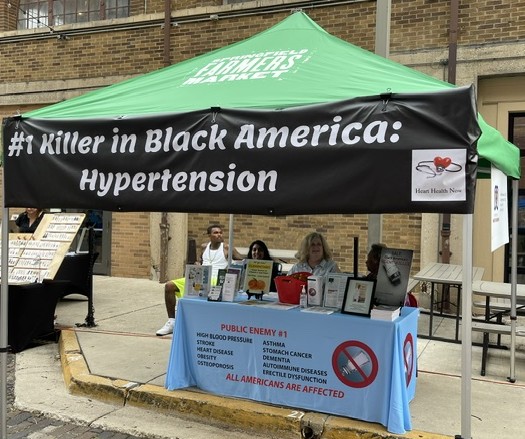
SPRINGFIELD, OH, UNITED STATES, June 23, 2026 /EINPresswire.com/ — Springfield, OH – June 23, 2026 – Can we persuade a community to prevent, diagnose and manage high blood pressure? Springfield has answered this question with a resounding yes!
Over a decade, Springfield health fair data showed very high rates of uncontrolled high blood pressure, also known as hypertension. However, in 2025, a dramatic improvement was observed: The Clark County Health Department screening station at the Minority Health Fair recorded blood pressure readings of 92% normal range! That’s a 180-degree shift from 2014, when 95% of the adults screened had uncontrolled high blood pressure.
Nationally, hypertension is the number one preventable cause of multiple health problems, especially in minority underserved neighborhoods. The American Heart Association asserts that about 58% of Black adults have high blood pressure, which is among the highest rates across the globe. Not only do Black adults have higher rates of blood pressure than other racial or ethnic groups, but the rates of severe hypertension, which can develop earlier in life, are also significantly higher. As a consequence, according to the U.S. Department of Health and Human Services’ Office of Minority Health, in 2022, Black/African Americans were 85% more likely than the U.S. population overall to die from essential hypertension and hypertensive renal disease.
As noted by the Joint Commission, the nation’s oldest and largest healthcare accrediting body, the prevention and control of high blood pressure is the single most important factor in reducing heart attacks, strokes, heart failure, kidney failure, atrial fibrillation, dementia, and death from any cause. The Springfield health fair results show us that we can make a significant community-wide difference on this front.
The dramatic turnaround in Springfield reflects years of dedication, community trust-building, and preventive efforts led by Dr. Surender R. Neravetla’s Heart Health Now LLC (501(c)(3)). The approach—which targeted underserved groups such as Black Americans, Hispanic Americans, migrant workers, Haitians, and individuals below the poverty line—emphasized prevention education, early diagnosis, aggressive treatment, and home management. Services included blood pressure screening, lab testing (diabetes, anemia, kidney function), PSA, mammography, vision, dental, and CPR training. Free health toolkits (~$200 value)—including a BP monitor, scale, thermometer, and pulse oximeter—were distributed.
In addition to nine health fairs conducted over eleven years, a community outreach campaign included:
• Engagement in churches, schools, parks, libraries, and community events
• Educational materials distributed widely
• Multilingual support and transportation assistance
It’s expected that this dramatic, community-wide reduction in hypertension will lead to reduced heart attacks, strokes, kidney failure, and dementia, lower overall mortality, and healthier, more vibrant communities.
The Joint Commission offers two critical takeaways:
• High blood pressure is the most important modifiable risk factor for major diseases. The goal BP is less than 130/80 mm Hg.
• Collaboration with community leaders is essential for the screening and control of hypertension.
Surender R. Neravetla, MD, FACS
Heart Health Now LLC
+1 937-215-9076
neravetla@yahoo.com
Legal Disclaimer:
EIN Presswire provides this news content “as is” without warranty of any kind. We do not accept any responsibility or liability
for the accuracy, content, images, videos, licenses, completeness, legality, or reliability of the information contained in this
article. If you have any complaints or copyright issues related to this article, kindly contact the author above.

Media gallery