
Key Takeaways
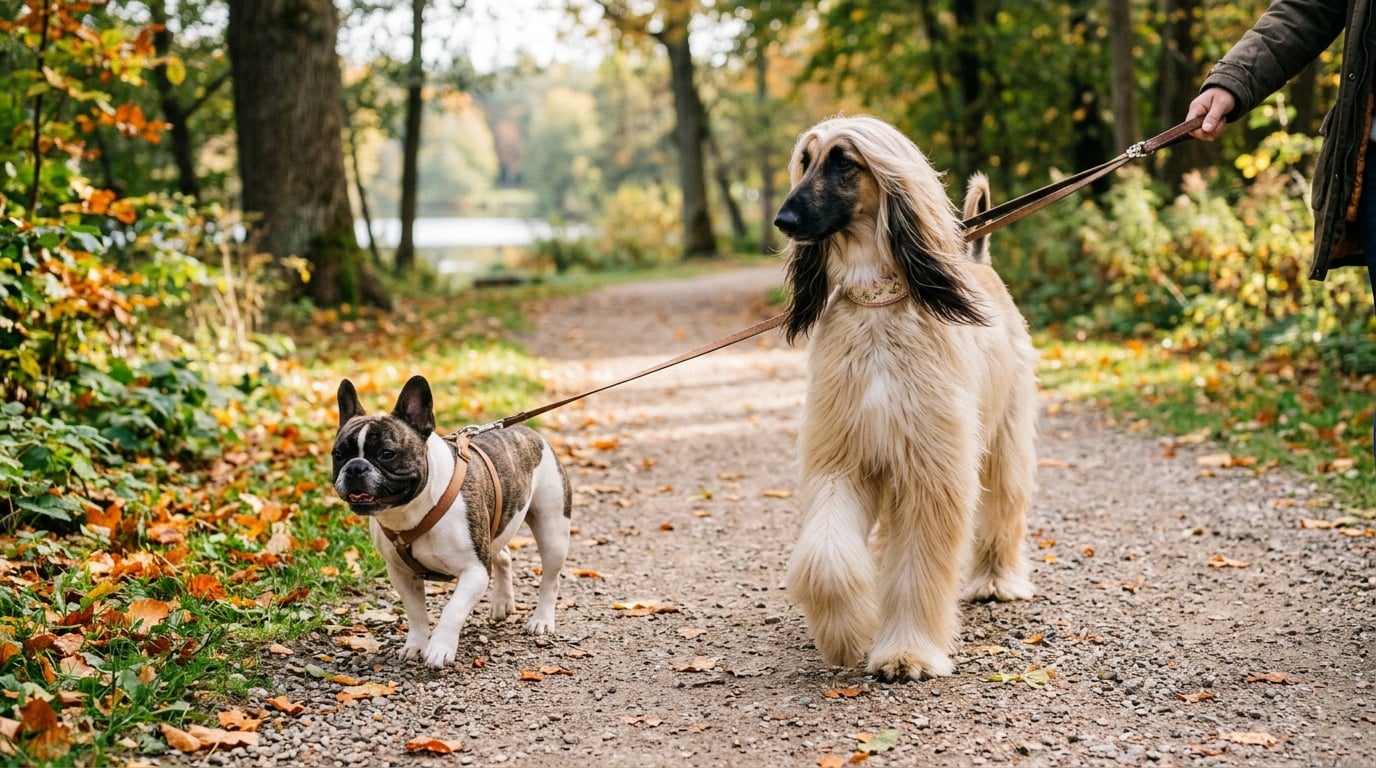
- French Bulldogs are compact, affectionate companions weighing under 28 pounds, while Afghan Hounds are tall, independent sighthounds standing 24 to 29 inches at the shoulder
- Frenchies need only about 30 to 45 minutes of light daily exercise, while Afghan Hounds thrive with over 2 hours of daily activity and secure fencing
- Grooming looks completely different between the breeds: Frenchies need weekly brushing plus regular wrinkle cleaning, while Afghan Hounds require brushing and combing three times a week
- Health risks differ sharply, with French Bulldogs prone to brachycephalic breathing issues and Afghan Hounds susceptible to bloat and sensitive to anesthesia
- Prospective owners researching French Bulldog temperament and care can find more breed-specific guidance at LeSnort
Picking a dog breed is a bit like picking a travel destination. Some people want a cozy cabin close to home, and others want a wild trek through unfamiliar terrain. French Bulldogs and Afghan Hounds sit on opposite ends of that spectrum, and understanding what separates them helps any prospective owner avoid a poor match.
Two Breeds, Two Worlds
French Bulldogs and Afghan Hounds could not look, act, or live more differently if they tried. One is a stocky, snub-nosed companion built for laps and city apartments. The other is a tall, elegant sighthound with a history of chasing game across rugged terrain. Learning about French Bulldog temperament and care is a natural starting point for many first-time owners, and LeSnort covers those specifics in depth for anyone weighing whether the breed fits their lifestyle.
Both breeds have devoted fan bases, but for very different reasons. Frenchies win hearts with their goofy snorts, wrinkled faces, and constant desire to be near their people. Afghan Hounds turn heads with their flowing coats and almost regal bearing, while quietly forming a deep bond with the humans they trust. Choosing between them means being honest about daily routines, living space, and how much time can be devoted to exercise and grooming.
Size and Build Compared
Size is one of the most obvious differences between these two breeds, and it shapes nearly everything else about their care. French Bulldogs are small, muscular dogs, typically weighing under 28 pounds and standing about 11 to 13 inches tall at the shoulder. Their compact frame, short legs, and heavy bone structure give them a sturdy, front-heavy look that fits comfortably into small homes and apartments.
Afghan Hounds occupy a much larger frame. Male Afghan Hounds stand about 27 inches tall and females about 25 inches, with typical weight between 45 and 60 pounds. Their long legs, deep chest, and lean build were shaped by centuries of coursing game across mountainous terrain, and that athletic silhouette still shows in how much space and movement they need day to day. A Frenchie can nap comfortably on a studio apartment couch; an Afghan Hound generally needs more room to stretch out and move.
Temperament: Cuddly vs Dignified
Personality is where these two breeds really part ways, and it might be the single most important factor in deciding which one fits a household.
French Bulldog’s Social, People-Pleasing Nature
French Bulldogs are companion dogs through and through. They are affectionate, socially motivated, and deeply attached to their people, often preferring to stay in close physical proximity rather than venturing out on their own. Frenchies are smart, playful, and eager to please, which makes them approachable for singles, couples, and families alike. Their calm, adaptable temperament and lack of aggression also make them a solid choice around young children, since they tend to be gentle and easygoing rather than pushy or territorial.
Afghan Hound’s Aloof but Loyal Streak
Afghan Hounds carry themselves with a dignified, almost cat-like independence. They can seem aloof with strangers, but that reserve masks a fierce loyalty toward the people they consider their own family. Despite their noble demeanor, Afghan Hounds are surprisingly playful behind closed doors and enjoy being silly with owners they trust. Indoors, they tend to be calm, tidy, and quiet, which surprises people who expect a high-energy sighthound to be constantly underfoot. That combination of outdoor athleticism and indoor composure is part of what makes the breed so distinctive.
Daily Care and Exercise Demands
Exercise needs are one of the clearest ways these breeds diverge, and mismatched expectations here are a common reason owners struggle.
Frenchie’s Low-Key Activity Needs
French Bulldogs need only about 30 to 45 minutes of moderate exercise spread across the day. Short walks, gentle games of fetch, light tug-of-war, and indoor play are ideal, while intense or prolonged activity should be avoided.
- Their short faces make breathing less efficient than long-nosed breeds, so heat and strenuous exertion are genuine risks.
- Frenchies do best in moderate temperatures and should never be pushed to exercise in hot or humid weather.
- Because of their front-heavy build, they are poor swimmers and should never be left unattended near water.
Afghan Hound’s High-Energy, High-Prey-Drive Lifestyle
Afghan Hounds live at the opposite end of the energy scale. As agile, high-energy sighthounds, they benefit from over 2 hours of physical and mental stimulation each day.
- A strong prey drive means Afghan Hounds should stay leashed or contained within a securely fenced yard at all times.
- They can adapt to apartment living, but only when given ample outdoor exercise to burn off their natural drive to run.
Mental stimulation matters just as much as physical activity, since a bored Afghan Hound can become restless indoors within a short time.
Grooming: Wrinkles vs Flowing Coats
Grooming routines could hardly look more different between these two breeds. French Bulldogs have low coat maintenance but high skin maintenance. Their short coat only needs a weekly brush and a bath every six to eight weeks, but the wrinkles and folds around the face and nose trap moisture, dead skin, and bacteria. Those folds need cleaning and thorough drying every day or every other day to prevent infections from taking hold.
Afghan Hounds demand the opposite kind of commitment. Their long, silky coat requires brushing and combing three times a week to prevent painful mats and tangles from forming. This grooming routine calls for real weekly time investment, and the breed is generally recommended for owners who already have experience managing a demanding coat. Anyone drawn to the Afghan Hound’s glamorous look should plan accordingly.
Training Challenges for Each Breed
Neither breed is considered easy to train in the traditional obedience sense, though the reasons differ. French Bulldogs can be stubborn, which sometimes surprises new owners who expect their eager-to-please nature to translate into fast learning. The good news is that Frenchies are people pleasers at heart, and using food as a motivator tends to smooth out most training bumps. Early socialization to new people, places, and situations also helps shape a well-rounded adult dog.
Afghan Hounds present a different kind of challenge. They are strong-minded and independent, traits that were bred into them for centuries of working somewhat autonomously in the field. Training an Afghan Hound calls for patience and consistent, positive reinforcement rather than repetition-heavy drilling. Owners who respect the breed’s dignified nature and keep sessions short, upbeat, and reward-based tend to see far better results than those who try to force compliance.
Health Risks Owners Should Expect
Every breed carries its own set of health considerations, and knowing them ahead of time helps owners plan for veterinary care and budget accordingly.
French Bulldog’s Brachycephalic Concerns
The French Bulldog’s flat face, while part of its charm, is also the root of its biggest health risks. Brachycephalic airway syndrome can cause breathing problems, overheating, and complications during anesthesia. Frenchies are also prone to spinal disorders such as intervertebral disc disease, along with skin fold dermatitis that stems from the same wrinkles that give them their signature look. Regular veterinary checkups and attentive at-home care go a long way toward catching these issues early.
Afghan Hound’s Bloat and Anesthesia Sensitivity
Afghan Hounds face a different set of risks tied to their deep-chested build. That body type leaves them susceptible to bloat and sensitive to anesthesia, since gastric dilatation-volvulus is a life-threatening emergency that requires immediate veterinary attention and their low body fat affects anesthesia tolerance. Anyone considering surgery for an Afghan Hound should seek out a veterinarian experienced with sighthounds specifically.
Choosing Between These Distinct Companions
The decision between a French Bulldog and an Afghan Hound really comes down to lifestyle honesty. A Frenchie fits well with owners who want a devoted, low-exercise companion content with short walks, moderate temperatures, and plenty of couch time. An Afghan Hound suits owners who can commit to serious daily exercise, frequent grooming sessions, and a calmer, more independent style of affection.
Both breeds reward the right owner with deep loyalty, though that loyalty shows up in very different ways. Matching daily routines, living space, and grooming tolerance to the breed’s real needs, rather than to its looks alone, is the surest path to a happy, healthy companion for years to come. For those still weighing the wrinkly, snorty option, French Bulldog breed guides offer a deeper look at what daily life with a Frenchie actually involves.
LeSnort
3312 N Backweight Loop
Post Falls
Idaho
83854
United States


